What is the difference between Dynamics 365 and Business Central?
What is the difference between Dynamics 365 and Business Central?
March 21st, 2024
5 min read
Understanding the difference between Dynamics 365 and Business Central and knowing which is best suited to your organisation – can be confusing. While Business Central is part of the broader Dynamics 365 suite, it serves a distinct purpose as Microsoft’s ERP solution for small to mid-sized businesses. To clarify how these solutions differ and where they overlap, it’s helpful to explore what each one offers within the Microsoft ecosystem.
Interested in learning more about how Microsoft Technology can improve your organisation? Sign up to our upcoming webinar in collaboration with Creative Computing: ‘The Connected Non-profit: Connecting Fundraising, Finance and Mission with AI’
Dynamics 365: A Simple Definition
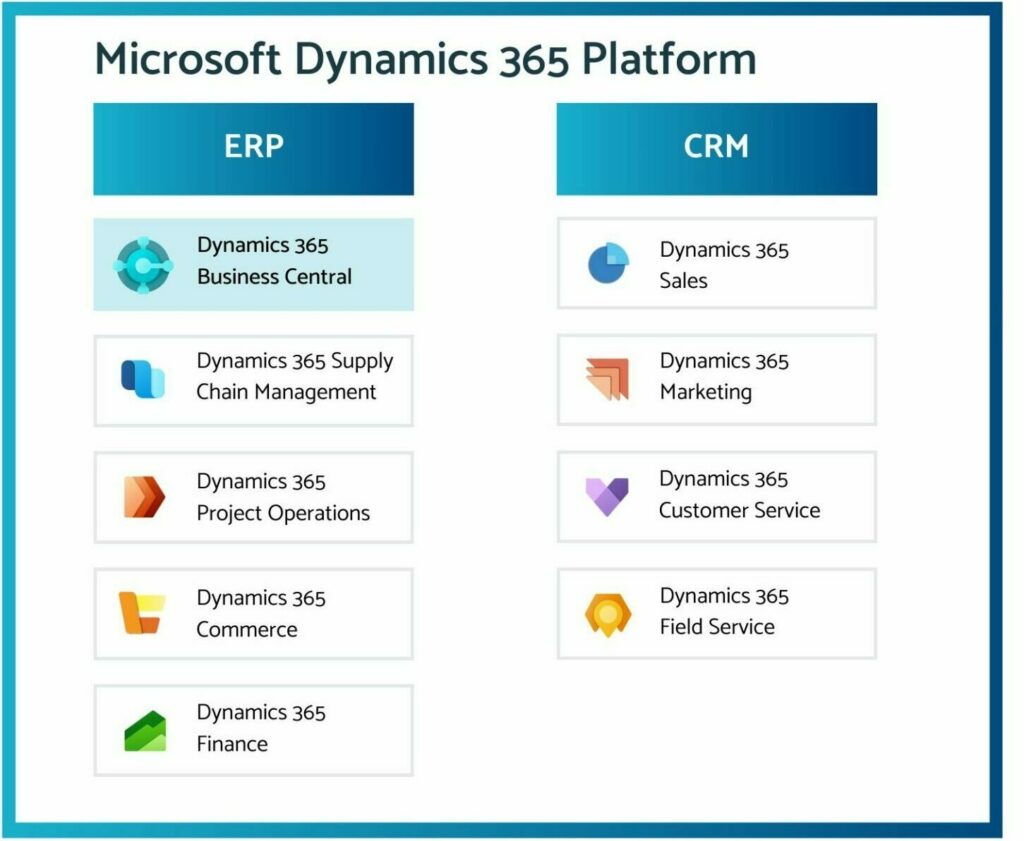
Dynamics 365 is a suite of cloud-based business applications that spans both CRM (customer relationship management) and ERP (enterprise resource planning). Together, these applications help organisations manage customer relationships, core operations, finance, and data across the business.
The CRM side of Dynamics 365
The CRM applications focus on sales, marketing, customer engagement, and insight. They are designed to help organisations attract, convert, and retain customers while building stronger relationships.
Key CRM applications include:
- Dynamics 365 Sales – Support sales teams with pipeline management, relationship tracking, forecasting, and actionable insights.
- Dynamics 365 Customer Insights – Journeys – Plan and manage marketing campaigns, nurture leads, and drive personalised customer engagement.
- Dynamics 365 Customer Insights – Data – Unify customer data from multiple sources to create a single, actionable customer view.
- Dynamics 365 Customer Service – Deliver consistent, efficient customer support across multiple channels.
The ERP side of Dynamics 365
The ERP applications focus on finance, operations, supply chain, and project delivery. They help organisations run their day-to-day operations more efficiently and at scale.
Key ERP applications include:
- Dynamics 365 Finance – Automate financial processes, improve reporting, manage budgets, and support compliance.
- Dynamics 365 Business Central – An all-in-one ERP solution for SMEs, covering finance, operations, sales, and service.
- Dynamics 365 Supply Chain Management – Optimise inventory, manufacturing, and logistics.
- Dynamics 365 Project Operations – Plan and manage projects, resources, and profitability in a single system.
- Dynamics 365 Commerce – Connect retail, e-commerce, and back-office operations to deliver a unified customer experience.
There are many more applications within the Dynamics 365 suite, each designed to work together and extend functionality. When combined, the CRM and ERP capabilities provide a connected platform that supports both customer-facing teams and back-office operations, helping organisations improve efficiency and make better-informed decisions.
Dynamics 365 Business Central: Microsoft’s ERP Solution
From the definition above, you may have realised that Business Central is, in fact, part of Dynamics 365. As such, the difference between the two is technically none, as Business Central is one of many applications that make up the Dynamics 365 suite of applications.
However, organisations using just Business Central compared to all products within the stack will have a large difference in the capabilities of their solution.
When is it best to use Dynamics 365 Business Central?
Business Central is specifically targeted at small to mid-sized businesses, that need robust ERP capabilities to manage financials, manufacturing, shipping, projects, services, and more. If this is what you are looking for then this solution is a great way to seamlessly manage all these capabilities.
Does Business Central have CRM capabilities?
Business Central continues to offer basic CRM functionality, such as contact management, opportunity tracking, and sales quotes. However, recent updates have introduced AI-powered enhancements that improve sales workflows. For example, the new Sales Order Copilot Agent can now extract order details from unstructured emails and attachments, automatically generating quotes or orders.
These features reduce manual effort and improve accuracy, but for advanced CRM needs – such as lead scoring, campaign automation, or customer service – organisations should still consider integrating dedicated Dynamics 365 CRM apps like Sales, Marketing, or Customer Service.
What applications does Business Central integrate with?
Business Central can operate as a standalone solution, making it ideal for organisations with straightforward workflows and operational needs. However, one of the key advantages of the Dynamics 365 suite is its seamless integration across applications. This enables organisations to build a tailored solution – combining only the tools they need – while avoiding unnecessary complexity or cost. As business requirements evolve, additional Dynamics 365 applications can be added to extend functionality without disrupting existing systems.
For example, an organisation may need basic ERP capabilities, while also needing advanced sales and marketing functionality. Here, the organisation may choose to integrate Dynamics 365 sales, marketing and business central, to provide them with the functionality they need.
Purchasing and Licensing Considerations
It is important to note, that each application within the Dynamics 365 stack is licensed separately. Some are priced higher than others and have different tiers available for different organisational sizes and needs.
However, as part of the Microsoft ecosystem, organisations can often enjoy discounted rates when they use multiple of the applications within Dynamics 365.
Dynamics 365 vs Business Central: Final Verdict
In summary, Business Central is one of the many applications within the Dynamics 365 suite. As Microsoft’s dedicated ERP solution for small to mid-sized businesses, it offers robust functionality for managing finance, operations, and supply chain processes. While it sits under the Dynamics 365 umbrella, Business Central serves a distinct purpose and is often used independently.
However, organisations that combine Business Central with other Dynamics 365 applications – such as Sales, Customer Insights – Journeys, or Customer Service – can unlock significantly broader capabilities and a more integrated digital experience.
Pragmatiq are specialists in the CRM side of Dynamics 365 and have an extensive network of established ERP partners so no matter your needs we can help. If you would like to find out more about anything within this blog, please contact one of our experts at 01908 038110 or email us at info@pragmatiq.co.uk.
Want to keep in touch?
Sign up to our newsletter for regular updates.
"*" indicates required fields