

Optimising resource scheduling with Dynamics 365 Field Service
Optimising resource scheduling with Dynamics 365 Field Service
April 23rd, 2026
5 min read
Resource scheduling is one of the most operationally constrained areas in field service delivery.
It sits at the intersection of demand, capacity, geography, skills, and customer expectation. When any of these variables fall out of alignment, the impact is immediate: delayed response times, inefficient engineer utilisation, and inconsistent service delivery.
Most organisations do not struggle because they lack resources. They struggle because they cannot consistently deploy those resources in an optimal way as conditions change throughout the day.
Microsoft Dynamics 365 Field Service helps address this by introducing structure, visibility, and intelligence into scheduling decisions.
Why resource scheduling becomes inefficient at scale
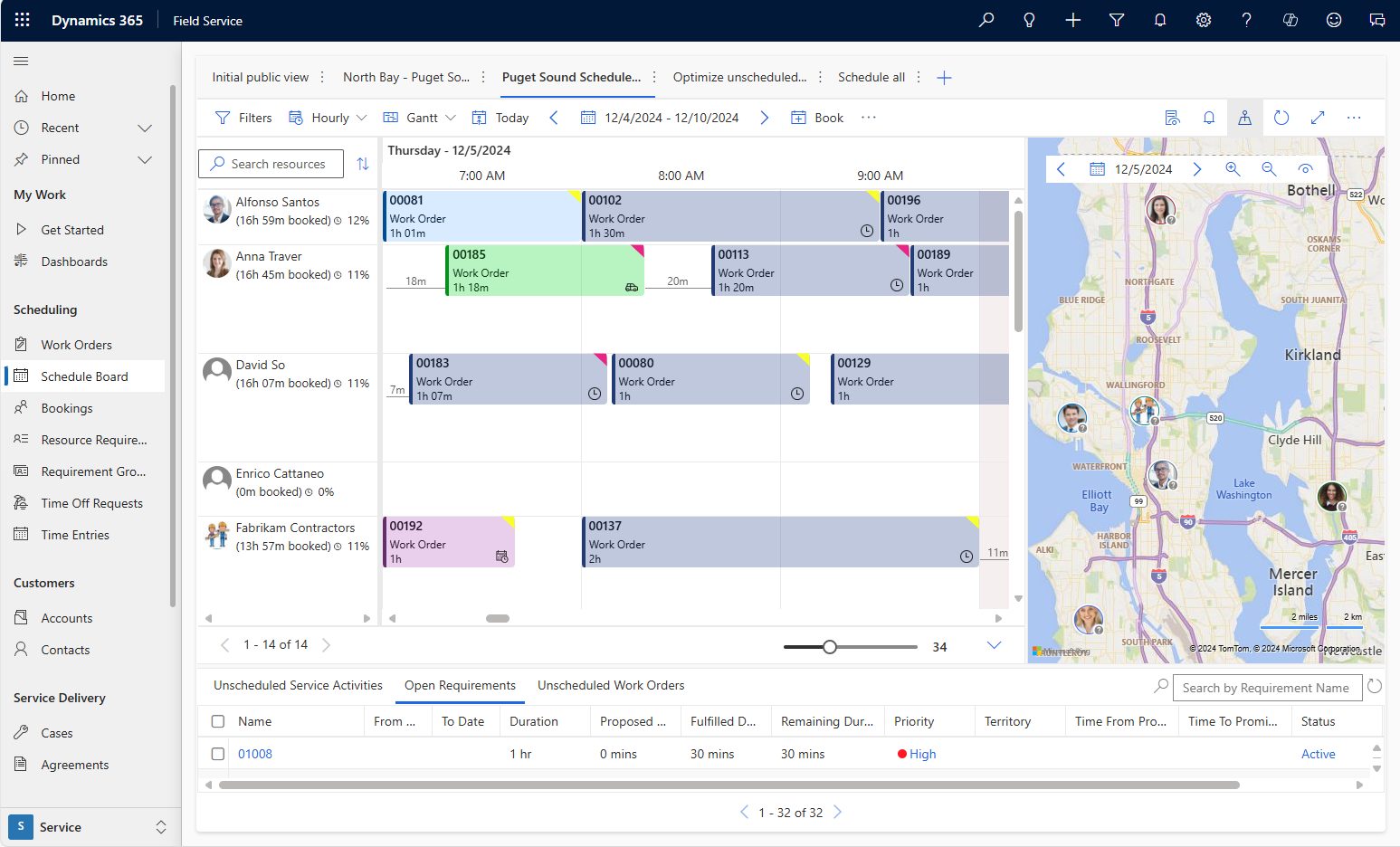
In smaller teams, scheduling is often managed informally. A coordinator knows the workforce well enough to assign jobs effectively. As organisations grow, this model stops scaling effectively.
Complexity increases across multiple dimensions:
- Jobs vary in urgency, duration, and technical requirements
- Engineers have different skills, certifications, and experience levels
- Geographic spread introduces significant travel inefficiency
- Reactive work disrupts planned schedules
- Customer expectations reduce acceptable response times
Without structured support, scheduling decisions default to availability rather than optimisation.
The hidden cost of manual scheduling
Manual scheduling inefficiencies rarely appear dramatic in isolation, but they compound quickly across a working day.
Typical consequences include:
- Reduced jobs completed per engineer per day
- Skilled resource deployed on suboptimal work
- Increased travel time between appointments
- Dispatch teams constantly reshuffling schedules
- Reactive decision-making replacing planned optimisation
- Over time, this creates a system that appears functional but is structurally inefficient.
How Dynamics 365 Field Service improves scheduling decisions
Dynamics 365 Field Service introduces a structured, data-driven scheduling model. Instead of asking “who is available?”, it reframes the question:
Who is the most appropriate resource, in the most efficient location, at the most suitable time?
This shift moves scheduling from capacity allocation to operational optimisation.
Aligning skills and job requirements
Mismatched allocation is a common source of inefficiency. When engineers are assigned work outside their core expertise, it leads to longer job durations and reduced first-time fix rates.
Dynamics 365 helps ensure:
- Jobs are matched to the correct skill set
- Specialist resources are reserved for complex work
- Escalations are reduced through better initial assignment
This improves both efficiency and service quality.
Reducing travel inefficiency through location-based scheduling
Travel time is often treated as unavoidable, but it is one of the largest hidden costs in field operations.
Without optimisation, schedules often result in:
- Unnecessary travel between distant jobs
- Poor sequencing of appointments
- Underutilised regional coverage
Dynamics 365 uses location data to sequence work more efficiently, reducing wasted travel time and improving daily output.
Managing disruption in real time
Field operations are inherently dynamic. Emergencies, cancellations, and overruns are unavoidable.
With the Resource Scheduling Optimisation (RSO) capability, schedules can be recalculated based on live conditions, helping teams maintain efficiency even when plans change.
Note: Automated re-optimisation requires the Resource Scheduling Optimisation (RSO) add-on. Standard scheduling is included within Dynamics 365 Field Service.
Real-time visibility of field operations
Effective scheduling depends on visibility during execution, not just planning.
Dynamics 365 provides live operational insight into:
- Engineer location and status
- Job progress across the field workforce
- Available capacity throughout the day
- Impact of changes on overall schedules
This enables teams to respond proactively rather than reactively as the day evolves.
Operational impact of improved scheduling
When scheduling is optimised effectively, organisations typically see:
- Higher jobs completed per engineer per day
- Reduced travel time and operational cost
- Improved first-time fix rates
- Fewer missed or delayed appointments
- More consistent customer experience
For example, organisations such as Jaguar Espresso Systems have used Dynamics 365 Field Service to improve visibility and coordination across service operations, enabling more efficient use of field resources.
How this fits within Dynamics 365 Field Service
Resource scheduling is one part of a broader capability set that includes:
- Work order management
- Asset tracking and maintenance history
- Mobile workforce enablement
- Preventative maintenance planning
Each area reinforces the others. Scheduling becomes most effective when connected to accurate work order data and asset information. Want to learn more, check out our blog on automating work orders in Dynamics 365 Field Service.
Who this is relevant for
This approach is particularly relevant where:
- Field teams are mobile or geographically distributed
- Service demand is unpredictable or reactive
- Skill requirements vary across job types
- Dispatch relies heavily on manual coordination
- Operational visibility is limited or fragmented
In most cases, the constraint is not workforce size but coordination complexity.
Turning scheduling complexity into operational control
Resource scheduling is not just an operational task. It is a core driver of cost efficiency, workforce productivity, and customer experience. As complexity increases, manual scheduling approaches stop scaling effectively.
Dynamics 365 Field Service introduces structure, intelligence, and real-time visibility into scheduling decisions, enabling organisations to move from reactive coordination to optimised field operations.
If you are exploring how to improve field service efficiency, Pragmatiq can help design and implement Dynamics 365 Field Service solutions tailored to your operational model. Get in touch to discuss your requirements by emailing info@pragmatiq.co.uk or calling 01908 038110.
Want to keep in touch?
Sign up to our newsletter for regular updates.
"*" indicates required fields